
- +917737445995
- awasthistvachaa@gmail.com
-
Morning (Wed Close): 10:00 AM To 01:00 PM | Morning (Only Tue, Fri): 10:00 AM To 12:00 PM | Evening: 04:30 PM To 07:00 PM


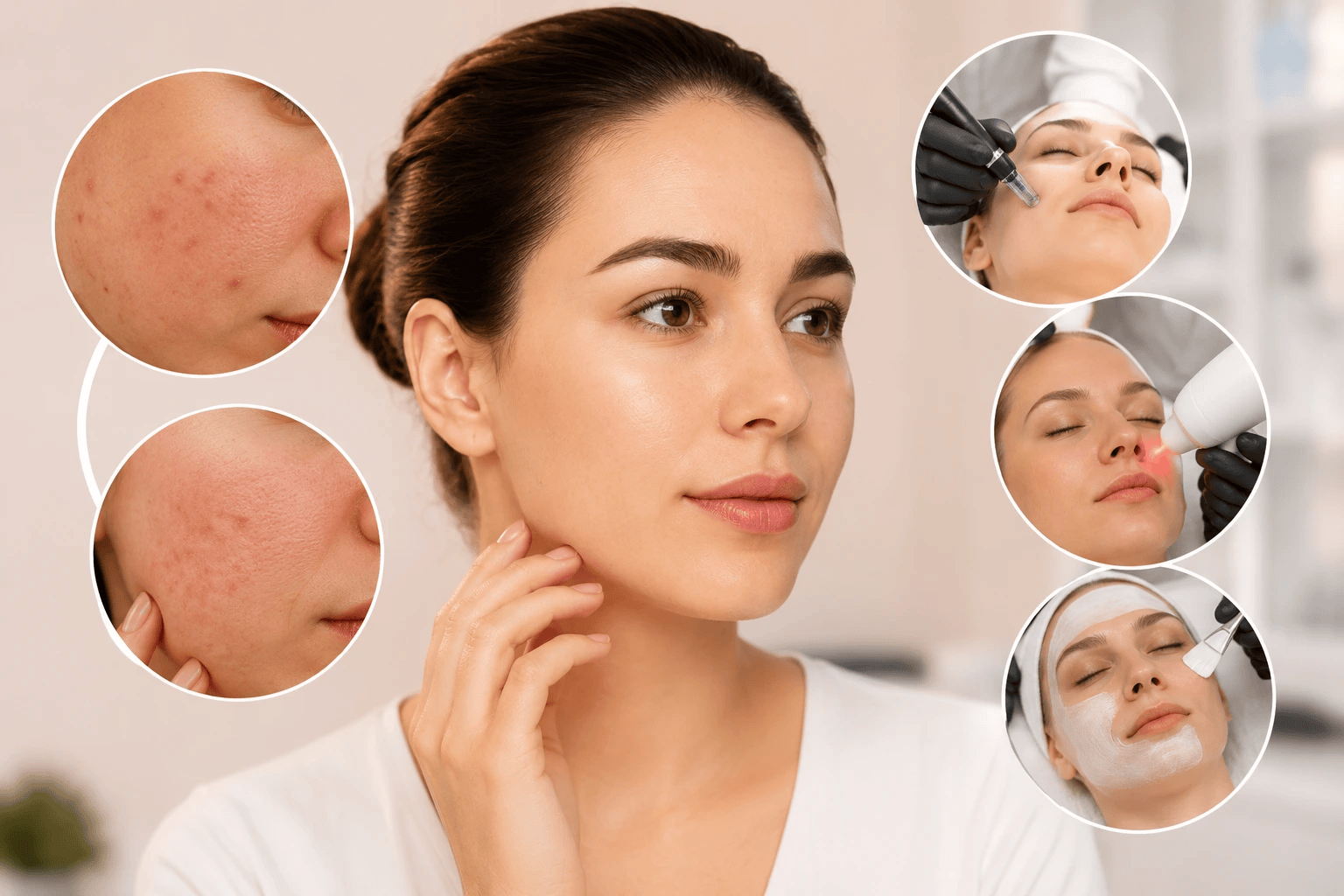
How To Remove Acne Scars & Pimple Marks: Causes, Treatment & Prevention
- Admin
- Mar 26, 2026
Introduction:
Smooth, clear skin is something that everyone wants— but for millions of people throughout India, acne scars and spots are a stubborn plague long after the pimple itself has healed. We know that whether you’re a teen struggling with your first breakout, or an adult left with the souvenirs of acne days past (and they can be numerous), there’s good news — effective acne scars treatment has come such a long way. With the right knowledge and the right specialist, clearer skin can definitely be a goal.
In this article, we will help you to learn more about the same. Keep on reading to take the right steps towards healthier and clear skin!
What Are the Reasons Behind Acne Scars and Pimple Marks?
But why do acne scars form in the first place, let’s explore before we jump into how to treat them? When a pimple forms, it causes inflammation under the skin. In an effort to heal itself, the skin makes collagen — a protein that gives the skin its structure. Too little collagen results in a depressed (atrophic) scar. Excessive collagen formation results in a raised (hypertrophic or keloid) scar.
The most common causes and risk factors are:
-
Picking or squeezing pimples — This is the most common reason for the worsening of acne scars. It forces bacteria inside the skin and breaks up the natural healing process
-
Delayed or poor acne treatment — Prolonged, untreated active acne is associated with an increased risk for permanent scarring.
-
Genetics — Some people are genetically inclined toward scarring based on hereditary characteristics of the skin.
-
Hormonal fluctuations — Hormone changes during puberty, menstruation or pregnancy increase acne severity and make scarring more likely.
-
Deep or cystic acne — Nodular and cystic acne go deeper into the layers of skin, causing greater damage and a higher risk of scarring.
Different types of acne scars you need to know about
Not all scars are created equal, and understanding their type is the first step to selecting an appropriate pimple marks treatment.
-
Ice pick scars — Deep, narrow, pitted scars that penetrate the dermis and look like small punch holes.
-
Boxcar scars — Broad, round or oval dips with sharply defined edges.
-
Rolling scars — Wide, wave-like undulations on the skin surface due to fibrous tissue under the skin.
-
Hypertrophic or keloid scars — Raised, thickened scars due to excess collagen production during the healing process.
-
Post-inflammatory hyperpigmentation (PIH) — Black marks that remain after a pimple is healed; not technically true scars, but are often mistaken for them.
How to Get Rid of Pimple Scars — Professional Treatment Options
Ultimately, when it comes to Remove Acne Scars Naturally, professional treatments provide the most consistent and durable results. Contemporary dermatology has many options for different scar types and skin tones, as well as budgets.
Chemical peels:
Chemical peels exfoliate the skin's surface using acids such as salicylic acid glycolic acid, or trichloroacetic acid (TCA) to encourage new cell production. They are effective for superficial scars and post-inflammatory pigmentation. Session Requirements for Optimal Result Multiple sessions are generally required for optimal results.
Microneedling:
Microneedling involves the use of a device with fine needles to create controlled micro-injuries in the skin, stimulating the body’s natural collagen production. It is particularly effective for rolling and boxcar scars and safe to perform on all skin types, including Indian skin tones.
Fractional CO2 and Erbium YAG lasers:
These are amongst the most sophisticated options available for acne scar removal. They penetrate the deeper layers of the skin, breaking down scar tissue and stimulating collagen remodelling and leading to significant visible improvement in texture and appearance.
Dermal Fillers Injectable fillers:
The Dermal Fillers Injectable fillers especially hyaluronic acid-based ones — can temporarily elevate depressed scars and refine skin’s surface evenness. Brachioplasty are usually done with other surgeries for better results.
PRP Therapy (Platelet-Rich Plasma):
PRP therapy uses a patient’s own blood — spun down to boost growth factors — that is injected into scarred sites. It enhances recovery, promotes collagen production, and supports procedures such as microneedling and laser for better results.
Subcision:
Subcision is a minor surgical procedure in which a needle is placed beneath the skin to sever fibrous bands that anchor rolling scars to surrounding tissue. It is very effective for stubborn rolling scars that can't be treated effectively with other modalities.
How to Get Rid of Pimple Marks at Home — Natural Remedies That Work
Professional treatments yield the most substantial outcome, but some home-care practices that are evidence-based will aid in the healing process of skin and may help hyperpigmentation fade with time.
Increase your SPF usage: Sun exposure definitely aggravates hyperpigmentation. A broad-spectrum SPF 30 or higher sunscreen used every morning is non-negotiable.
Vitamin-C serums — Topical vitamin C prevents melanin production, and helps reduce spots from post-inflammatory hyperpigmentation over time.
Niacinamide — This brightening powerhouse minimizes pigmentation, controls oil production and boosts texture.
Retinoids — Topical retinol or prescription-strength tretinoin increases cell turnover, helping fade marks and smooth surface texture with regular use.
Aloe vera — It has a low impact on the depth of scars, but aloe provides soothing and calming properties that have a slight brightening effect to support skin health.
These methods are effective on gentle pigmentation and surface-level marks. Professional intervention is still necessary for deeper scars. If you’re looking for acne scar treatment in Jaipur, here are the options most supported by research — but just be sure to pair them with guidance from being something more experienced!
Acne Scars Treatment in Jaipur — Awasthi Stvachaa
Awasthi Stvachaa is a trusted dermatology and skin wellness clinic providing advanced acne scar treatment in Jaipur. The clinic is run by Dr Sankalp Awasthi, a well-known dermatologist and hair transplant surgeon who has more than 19 yrs of clinical experience in acne treatment, post-acne pigmentation management, laser procedures, hair restoration, vitiligo therapy; chronic skin conditions including strict hand hygiene. Awasthi Stvachaa has emerged as one of the most trusted names for skin health in Rajasthan, owing to Dr. Awasthi's expertise in both conventional and cosmetic dermatology along with access/tools for latest treatments.
Prevention — The Superior Strategy
Prevention is the best treatment for acne scars! Here’s what dermatologists are unanimous on recommending:
-
Start acne treatment early — don’t wait for breakouts to become bad
-
Never pick at, pop, or squeeze active pimples
-
Use non-comedogenic skincare products
-
Drink plenty of water and eat a diet balanced in low-refined sugar, and dairy (If prone to acne)
-
See a dermatologist at the first sign of cystic or recurring acne
FAQ:
What are the best acne scars treatments out there?
The most appropriate Acne Scars Treatment depends on the type and severity of scars. For atrophic (depressed) scars, fractional laser resurfacing, microneedling and subcision give the best results. For pigmentation spots, he says, chemical peels and topical vitamin C or niacinamide are effective.
Can acne scars be removed completely?
There are no faster checks available for you. And the effectiveness of treatment varies with scar type and severity. Superficial pigmentation marks and mild rolling scars often respond very well to treatment with patients noticing much less obvious or gone scars. Deeper ice pick or boxcar scars may need more than one session over a period of months and may show significant improvement rather than total clearance.
How to remove pimple marks naturally at home?
Although no home remedy can substitute for How to Cure Acne Scars or Acne Scars Treatment for deep scars, a consistent routine of daily SPF sunscreen, vitamin C serum, niacinamide and retinol can gradually fade post-inflammatory dark marks over weeks to months. Mild skin healing is also contributed by extracts of aloe vera and green tea. Do not pick at skin and always shield it from sun exposure to avoid further darkening of marks.
How long does acne scar removal treatment take to show results?
Timelines vary by treatment type. For most patients, chemical peels and microneedling show improvement visually at about 3 to 6 sessions every 3 to 4 weeks apart. Laser treatments can achieve visible results in as little as 2 to 4 sessions. Home care products, including retinol and vitamin C serums, typically take eight to 12 weeks of consistent use for visible improvement. Patience and consistency are key.
Is it safe to get acne scar treatment for darker Indian skin tones?
Yes, certainly — but only if it’s an experienced dermatologist with a background in skin of colour. Indian clients are also more likely to develop post-inflammatory hyperpigmentation, so aggressive laser settings need to be modified as well. Microneedling, PRP and milder chemical peels are relatively safe and effective options for Indian skin.